On May 29, Colin Nessfield, President of the Institute of Concrete Technology, UK, Peter Robery, Fellow of the Royal Academy of Engineering, and Professor Bai Yun of University College London visited CBMA to exchange views on deepening cooperation and promoting green development. At the meeting, Zhi Xiao, General Manager Assistant of CNBM and Chairman of CBMA, issued a letter of appointment to Peter Robery. In addition, Wu Fade, Deputy General Manager of CBMA, and Colin Nessfield signed a memorandum of cooperation on behalf of both parties under the witness of Zhang Naiwang, Deputy President of CBMA. The meeting was chaired by Wu Fade.
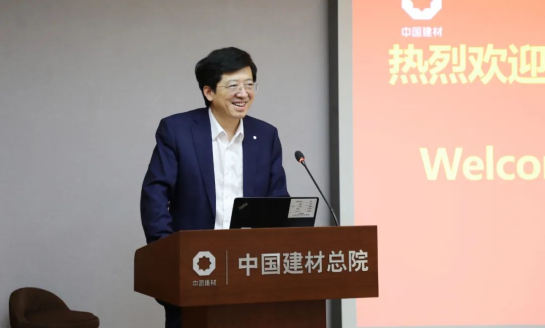
At the beginning of his speech, Zhi Xiao quoted "it is such a delight to have friends coming from afar" from The Analects of Confucius to extend a hearty welcome to guests from the UK. He said that CBMA was the first research institution for building materials since the founding of the People’s Republic of China, with a long line of breakthroughs in the history of China's building material technology, and significant contributions to China’s economic development. In the global context of low-carbon emissions, collaborative innovation across countries and regions has become a general trend. In order to push for low-carbon emissions in the building materials industry, CBMA will remain committed to expanding development space and increasing profitability, uphold the concept of collaboration and sharing, enhance international technological cooperation and pool expertise through the innovative “technology + industry + service” ecosystem, thus establishing a paradigm for international cooperation and development from three dimensions
· The first is to plan technological innovation from a global perspective. This includes focusing on global issues such as climate change, green development, innovation-driven development, and digital economy, seizing development opportunities, continuing to strengthen cross-field and multidisciplinary technological cooperation across the globe, and establishing an international innovation platform with international competitiveness.
· The second is to support development with the acquisition of international top-notch talents. This includes appointing overseas academicians and visiting professors to the expert workstation, recruiting more top-notch talents from overseas countries, expanding and intensifying international cooperation, and giving full play to the leading and supporting role of top-notch talents.
· The third is to boost development through high-level exchanges with foreign institutions. This includes laying a solid foundation for international cooperation, and leveraging international cooperation in various forms as a platform to tap potential strengths, build consensus, and promote close technological cooperation.
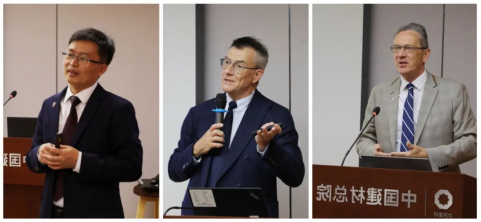
Colin Nessfield gave a briefing on the Institute of Concrete Technology, UK, which was established in 1972 to promote net zero emissions in concrete production. He said that the signing of this MOU marked the starting point for innovative cooperation between the two parties. He also held that the two parties would surely make breakthroughs in green concrete production as there are broad prospects for cooperation concerning standard formulation, mutual visits, and training.
Peter Robery delivered a speech titled "The Role of Forensic Engineering in Understanding Concrete Durability" to share his experience of inspecting, testing, analyzing and restoring degraded concrete infrastructure in the construction industry for more than 40 years. Based on his experience, full-life cycle supervision is particularly important to achieve the expected durability of concrete, and the wiser method is to designate trained personnel familiar with the construction site to supervise construction and maintenance activities.
Professor Bai Yun delivered a speech titled "Using waste-derived calcined clay as an alternative supplementary cementitious material-A UK experience" to present innovative findings made by British scholars in converting waste clay into supplementary cementitious materials and developing low-carbon cement, and share his views on current standards.
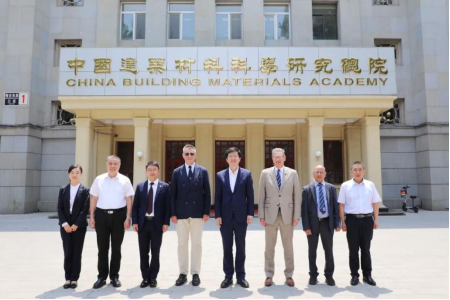
This event was a gathering for top institutions and top-notch talents across the world to discuss innovative methods for low-carbon emissions and green development in the Chinese and British building materials industries. It helped to build consensus, intensify pragmatic cooperation, and accelerate cooperation in technological innovations.
There were nearly 50 attendees, including Raman Mangabhai, Former President of the Institute of Concrete Technology, UK, Wen Zhaijun, Director of the Institute of Cement Science & New Building Materials of CBMA, chief from the Department of Science and Technology of CBMA, researchers from China Testing & Certification International Group, CNBM Zhongyan Technology, and the Institute of Cement Science & New Building Materials, as well as graduate students.